Insight
Put AI Where Your Workflows Already Run
If the new tool lives outside the path of work, people skip it. Put the system in your existing workflows, keep humans for the judgement calls, and make progress visible.
- 1Map the workTrace how data, clicks and decisions actually move today, step by step.
- 2Connect the systemsIntegrate finance, planning and customer tools so signals sync securely.
- 3Rules first, then AIAutomate the reliable with rules. Use AI for assessments. Escalate edge cases.
- 4Measure and refineLog outcomes, time and quality. Tighten rules where reality disagrees.
You do not get AI transformation by adding another window on the side. If the new thing lives outside your workflows, people will forget it, skip it, or rebuild the old path in Excel.
tldr
- Side tools get ignored. Put the new path inside your workflows.
- Automate with rules, use AI for judgement, route doubt to people.
- Connect finance, planning and customer systems so signals move together.
The scene: Tuesday 09:10
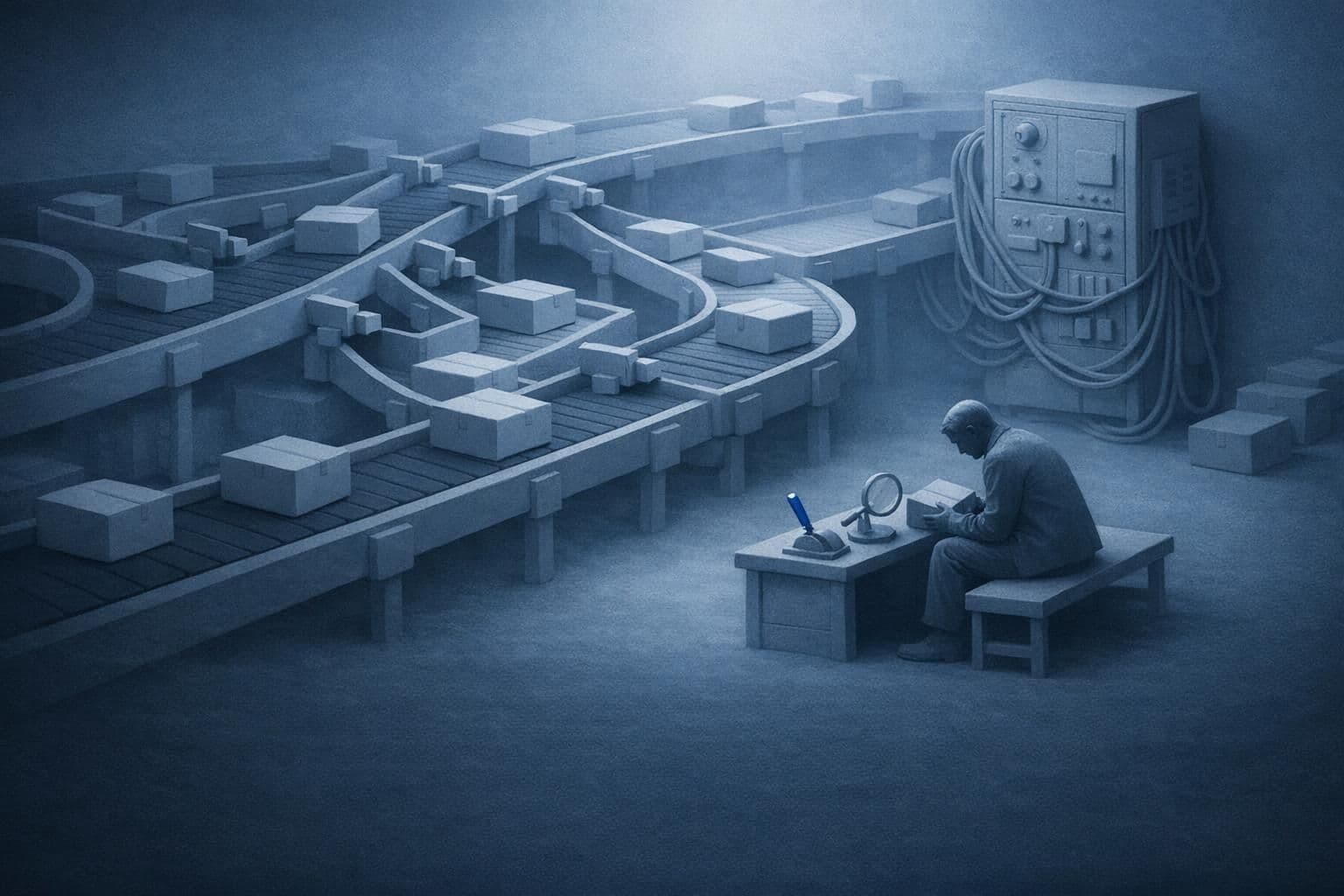
A planner approves a rush order while answering a supplier call. The ERP has stock. The transport board is almost full. Credit is tight this week. The “AI assistant” you bought sits in a separate tab. It needs a CSV that no one has time to export right now. The planner uses what is in front of them, not the assistant. A guess, a note in the chat, and the decision is made.
That is why add-on tools fail: they demand a separate ritual. Real work is a stream of signals, context and timing. If the system is not in that stream, it gets bypassed.
What is changing now
- Data is no longer scarce; intent is. People decide based on what is visible at their station in the flow. Make the right thing visible there, or it will not be used.
- Models are competent at pattern work but brittle at policy. That means rules belong in software, and models inform the grey areas. Human control sits on the edges where a decision carries risk.
- Integration costs have dropped. Secure APIs make it practical to connect finance, planning and customer systems without a year-long IT project. The value now is deciding what to connect and where to decide.
Build systems around your workflows
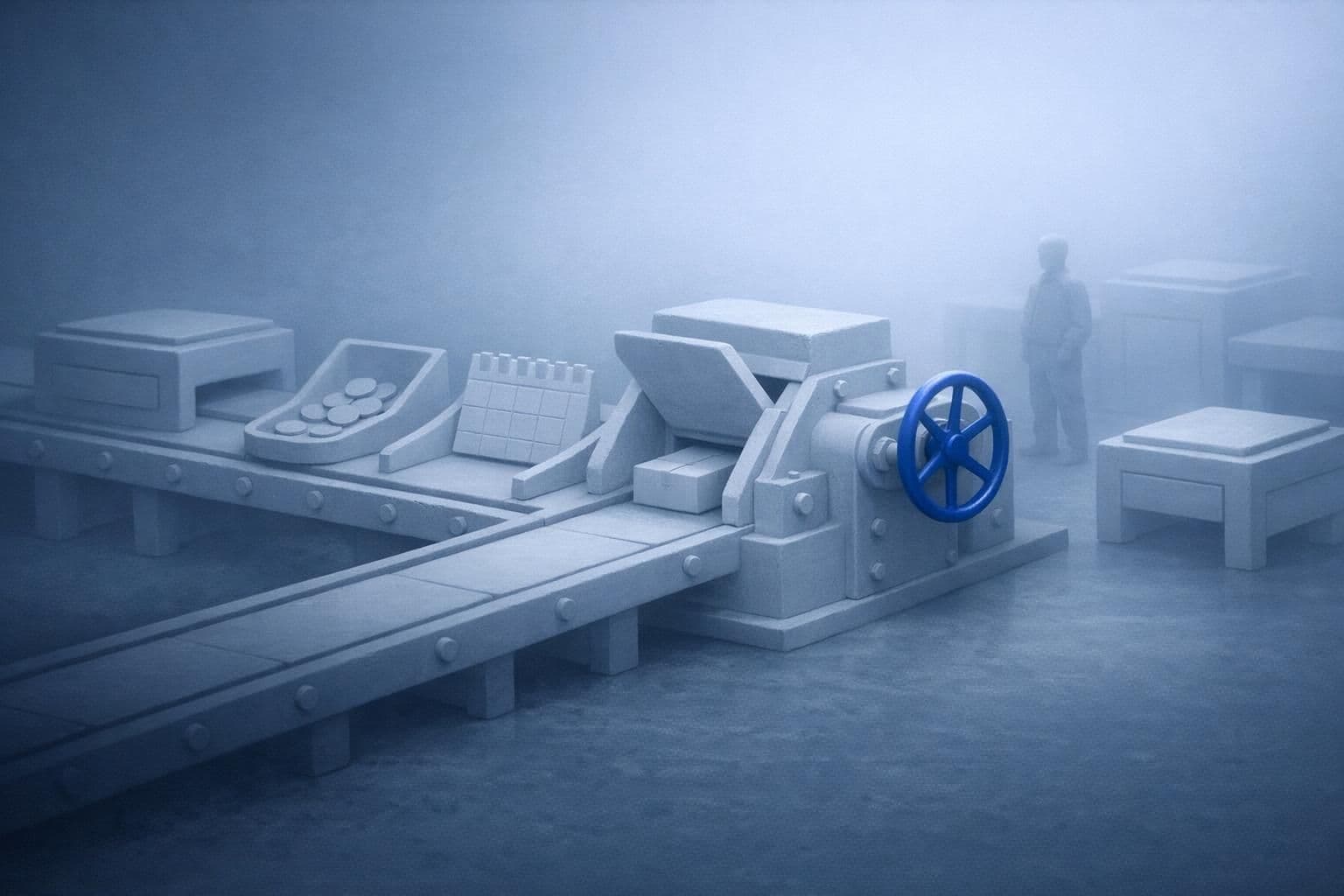
Start where work already moves. Put the new way as the path, not a detour.
- Map reality, not the org chart. Follow one order from quote to cash. Note each screen, click, copy‑paste, and wait. This is the path you must shape.
- Insert decisions where they happen. If credit limits matter at order capture, the check belongs in that moment, inside that screen. If capacity matters at scheduling, show it there, not in a report after the fact.
- Wire signals across systems. Finance, planning, customer service and operations must see the same facts. No exports. No manual reconciliations.
- Design the rails. Clear rules handle the boring. AI adds judgement where the data is varied or written in free text. Exceptions go to people with context.
- Make outcomes measurable by default. Every automated step logs inputs, outputs and who accepted or escalated. That is how you tune the system without politics.
This is WorkOS thinking: a connected operations layer that carries state and rules across tools. And it is DSS thinking: decisions expressed in software, with humans in the loop.
What to build (and what not to)
Build:
- A thin layer that sits in the flow. It inserts checks, fetches data, proposes actions and asks for a human only when needed.
- Rules made explicit. Policy, thresholds and approvals as code, not folklore.
- AI where text, variation or ambiguity blocks speed. Classify, summarise, extract, match. Always with monitoring and safe fallbacks.
- Escalation paths. When confidence is low, route to a role, not a name. Capture the decision and the why.
Do not build:
- A new portal that requires people to leave the system they live in.
- A fragile flow that breaks when a field name changes.
- A black box that cannot explain itself to finance or auditors.
- A one-off automation that saves a minute but creates a blind spot for the next step.
Why a generic tool or a one-off flow fails
- It fights gravity. Your team works in ERP, email, planning boards and CRM. A side app adds alt‑tabs and cognitive tax.
- It is blind to context. Without systems integration, a tool cannot see credit exposure, shipment cut‑offs or service-level commitments at the moment of decision.
- It is hard to govern. You cannot audit or improve what you cannot observe. Spreadsheets and bots hide the policy surface.
- It does not compound. One-off flows save time once. Systems built around the path of work accrue value as more of the flow runs on rails.
What it asks of you
- Decide the boundaries. Where do you want rules to decide, AI to advise, and people to own the final call?
- Bring the reality. Screenshots, sample emails, actual orders. We want how it truly runs on a Tuesday, not how the handbook says it should.
- Nominate owners. One person per domain who can say “yes” to a rule and “no” to an exception pattern.
- Agree on measures. Quality, time-to-decision, rework. We will use these to steer.
How we do it together
Our work is not a demo. It is a path to production.
- Opportunity audit: We map the live flow, find where rules belong, where AI helps, and where a human must stay in control.
- Process architecture: We design the WorkOS layer that connects your systems and the DSS that holds your rules and decision points.
- Production deployment: We integrate with the tools you already use. Secure, logged, with clear handovers between software and people.
- Ongoing optimisation: We watch the logs, tighten rules, retrain where needed and push new edges into automation. You keep the levers.
Humans stay where a decision still matters. Software takes the repeatable load. The system lives inside the tools your team already opens every day.
Next step
If you want AI transformation that survives Tuesday morning, put it in the path of work.
Talk to Agimatic about your business. We will map one core flow, show the architecture, de‑risk a pilot and plan deployment around your workflows. Book a meeting when you are ready to move.
Next step
What could AI transformation do for your business?
We map your workflows and show where AI, automation and software can make a concrete difference.