Insight

AI transformation in 2027: build systems, not flows
It is getting easier to stand up a flow. It is getting harder to stand out. The businesses that pull ahead will build systems around how work actually moves.
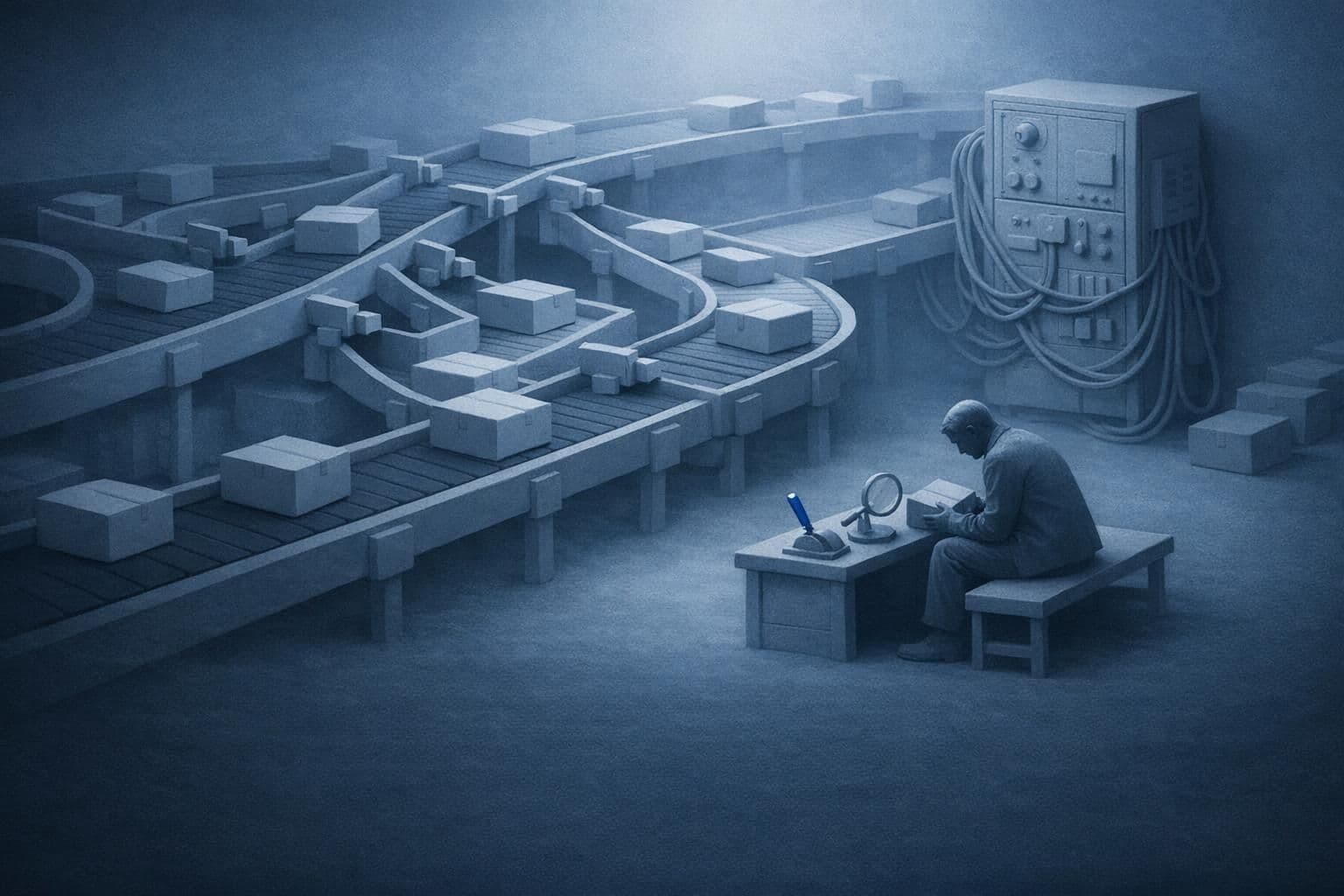
- 1A flowTwo tools are glued together. It works in the demo.
- 2The exceptionAn invoice without paperwork. The work still sits there.
- 3The systemRules, history and people, where a decision still matters.
- 4OperationsThe workflow keeps moving, and you can adjust it.
There is a shift most operators feel before they can name it.
A few years ago, connecting systems still required specialist knowledge. Today a manager can ask an assistant to sort the inbox, open a task, or draft a report — and get something that looks like a result. The floor has dropped. That is useful. It is also dangerous if you mistake it for transformation.
AI automation that only glues two tools together is becoming everyone’s. AI transformation is what remains when the glue is cheap.
When the floor rises, standing still is falling
Think of your industry’s baseline as a waterline. It rises whether or not you move. More people can ask a model for a first draft. More vendors sell the same kind of “agent” that promises to take the routine. More competitors can ship a tidy flow in an afternoon.
If you run last year’s play, you are not in the same place. Relative to the floor, you are lower.
That is why companies that buy isolated automations so often feel short-changed. The flow works in the demo. In the working week it is missing history, exceptions, and the next action. An invoice without paperwork. A shift that is not covered. A customer waiting on a reply nobody owns. The tool reports. The work still sits there.
We have seen this movie in other trades
A website once required hosting, DNS, and someone who could write the page. Then the builders arrived. Most firms could do it themselves. The people who still made a living from it were not selling markup. They were selling judgement, positioning, and an outcome the customer could not reach alone.
Bookkeeping followed a similar path. The software got cheaper. The work did not vanish. It moved to reconciliation, exceptions, and decisions that a generic product does not know your rules for.
AI automation is in that chapter now. Connectors, drag-and-drop, generic agents — they belong on the shelf. They are useful. They are not your advantage.
What actually becomes more valuable
As the technical floor rises, value moves to three places.
1. Knowing what to build. When almost anyone can wire a flow, the expensive question is not “can we?”. It is “what should move from request to decision to action — and what must a system never do alone?”. That takes time inside your operation, not inside a catalogue of integrations.
2. Context that survives the hand-off. An agent with no memory is an expensive guess. If an invoice exception is going to be resolved, the system needs the vendor, the last incident, the amount, and the rule that applies here. Otherwise you get another dashboard your team already knows is red.
3. People where it counts. Transformation is not the removal of your staff. It is the removal of the slog on the way to a decision only a person should make. Three people can then cover what used to take fifteen — not because you “replaced someone”, but because coordination is no longer the job.
That is the model we build to: map the workflow, put the rules in the system, let AI take the repetition, and let your people own the exception.
Why “another tool” is the wrong purchase
Off-the-shelf products are easy to buy. They come with a demo, a price, and a checkbox. They rarely create a new way of working. They give you one more login, one more integration to maintain, and a licence that outlives anyone using it.
Systems built into what you already run collect value the other way. Each improvement makes the next step cheaper. Each exception the system learns does not come back as the same fire drill. The investment compounds. It does not sit on a shelf and rust.
We see it when operations live in one movement: planning, attendance, tasks and communication in the same flow, instead of five tools that each “almost” cover the day. That is not magic. It is architecture.
What to invest in now
If you only have energy for three shifts in the near term, make them these:
From tool to workflow. Stop asking which app you are missing. Ask where work stalls — in sales, finance, operations or leadership — and build from there.
From reporting to resolution. A system that shows something is wrong is a minutes note. A system that routes the problem to the right person, with enough context to act, is operations.
From implementation alone to capability in the team. More companies can stand up simple flows themselves. What they lack is direction: which processes are worth touching, which rules must stay firm, and how people use AI day to day without inventing five private methods. Advice, training and embedded partnership become a larger share of the work. The building does not disappear. It gets sharper.
Technical skill is still required. It is no longer what sets you apart. The ability to name and deliver a clear return — time, capacity, fewer errors, a cleaner picture of the day — is what the market pays for when everyone can “put an agent on it”.
Why this is still the right place to stand
Almost all knowledge work is under the same pressure. Finance, customer service, planning, reporting. That is not a reason to leave the field. It is a reason to stand where the work is being made lighter — in the systems that move a business from manual coordination to intelligent operations.
If AI is going to take some of the routine in your industry, it is worse to rent random tools than to own the way that routine is replaced. You want to design the channel, not wait for the water to run around you.
2027 will be a year when more leaders look up and realise the chat window can do more than they budgeted for. Busy operators will look for people who can turn that into their company — not another generic agent. They will want someone who understands their rules, their systems, and their risk.
That is the work we take. AI transformation built around your business. From the first map of the opportunity to everyday operation.
If you can feel the floor rising, let us look at where your workflows actually stall — before anyone stands up another flow.
Next step
What could AI transformation do for your business?
We map your workflows and show where AI, automation and software can make a concrete difference.